
Leaks, water pressure and drain smells: InspectOS Pro section D
Section D of InspectOS Pro records the water supply, drainage and sanitary fixtures. It is a visual check within the general inspection. An active leak or a test of the pipes needs a visit of its own.
InspectOS Pro is rolling out in phases. Some capabilities described below are still being built.
Leaks, water pressure and drain smells
Low pressure and rusty water
Low pressure, discoloured water or green stains on joints can point to old or corroded pipes. The engineer records the pressure and condition of the supply pipes, and how the water looks.
A sewer smell in the bathroom
A sewer smell often comes from a missing or dry trap, which lets gases rise through the pipes. Traps and drains are a critical checkpoint in the method.
Checkpoints in the method: D2.3
Leaks around shower bases and baths
Worn sealing around a shower base or bath lets water into the floor and the ceiling below. The engineer rates the sealing from watertight to an active leak.
Checkpoints in the method: D3.2
The inspection is visual: the engineer works through each checkpoint on site and records the condition found on the day.
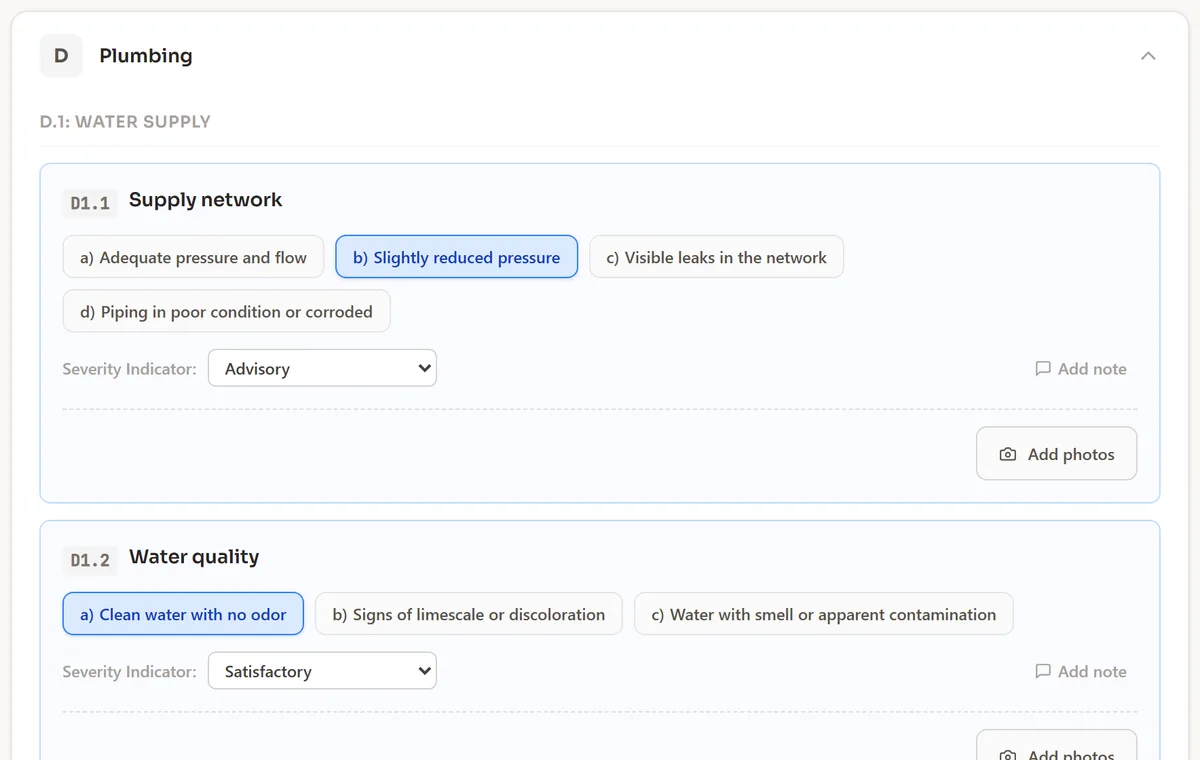
D.1: Water Supply
- D1.1Supply networkCritical checkpoint
Possible answers
- a)Adequate pressure and flow
- b)Slightly reduced pressure
- c)Visible leaks in the network
- d)Piping in poor condition or corroded
What it means for you: Low pressure can come from the public supply or the home's own pipes. Visible leaks and corroded pipes point to the home, so ask how long they have been there.
- D1.2Water quality
Possible answers
- a)Clean water with no odor
- b)Signs of limescale or discoloration
- c)Water with smell or apparent contamination
What it means for you: Limescale is common in many parts of the country. Water with a smell or signs of contamination calls for a laboratory test before you drink it.
- D1.3Taps & valves
Possible answers
- a)All functional and leak-free
- b)Minor wear on some
- c)Damaged taps or valves
What it means for you: Worn taps are simple replacements. Damaged shutoff valves matter more, because they are what closes the water off during a leak.
D.2: Drainage & Sewage
- D2.1Interior drainage
Possible answers
- a)Adequate flow at all points
- b)Slow flow at some points
- c)Blockages or bad odor
What it means for you: Slow drainage at one point is often local. Blockages or bad smells at several points can point to the shared pipework.
- D2.2Sewage piping
Possible answers
- a)Good condition and properly sized
- b)Signs of wear or improvisation
- c)Leaks or piping damage
What it means for you: Sewage leaks wet slabs and walls from the inside. Check whether the damp recorded in section B sits next to these pipes.
- D2.3Traps & drainsCritical checkpoint
Possible answers
- a)All with functional trap
- b)Some traps missing or dry
- c)No traps; odor backflow
- d)No drains
What it means for you: A dry trap lets sewer smells through. Often running the water is enough, but a missing trap needs a plumber.
D.3: Sanitary Fixtures
- D3.1Toilets & cisterns
Possible answers
- a)Functional and leak-free
- b)Minor leak or slow cistern
- c)Equipment damaged or inoperable
What it means for you: A dripping cistern wastes water every day. Damaged equipment is a question for the seller before the CPCV.
- D3.2Shower bases & bathtubs
Possible answers
- a)Watertight and in good condition
- b)Poor sealing or wear
- c)Active leak or structural damage
What it means for you: Poor sealing on a shower base lets water into the wall or the floor below. Look for damp recorded in the rooms next to it.
How this section reaches the report
In the report, section D shows each checkpoint's answer, severity, notes and photos. Read it alongside section B: many damp patches start at a plumbing leak. See the report
Frequently asked questions
- Why does the bathroom smell of sewage?
- Almost always because a trap is dry or missing. A trap holds water that stops sewer smells coming back up. Checkpoint D2.3 records missing or dry traps and odour coming back.
- What causes low water pressure?
- Limescale in the taps, a leak in the pipes, or old corroded pipework. Checkpoint D1.1 separates slightly reduced pressure, visible leaks and pipework in poor condition.
- How is a hidden water leak spotted?
- Stains on the ceiling below a bathroom, worn joints in the shower and a meter that turns with every tap closed are typical signs. Checkpoint D3.2 records the sealing of shower bases and bathtubs.
Book the visit
- Pre-Purchase Inspection
from 595 €
Book