
What a gas installation inspection checks: InspectOS Pro gas module
The InspectOS Pro gas module records a gas installation in eight sections, from the meter to the evacuation of combustion gases. It serves gas inspections in homes and in condominium buildings. The service and its price are at the end of this page.
InspectOS Pro is rolling out in phases. Some capabilities described below are still being built.
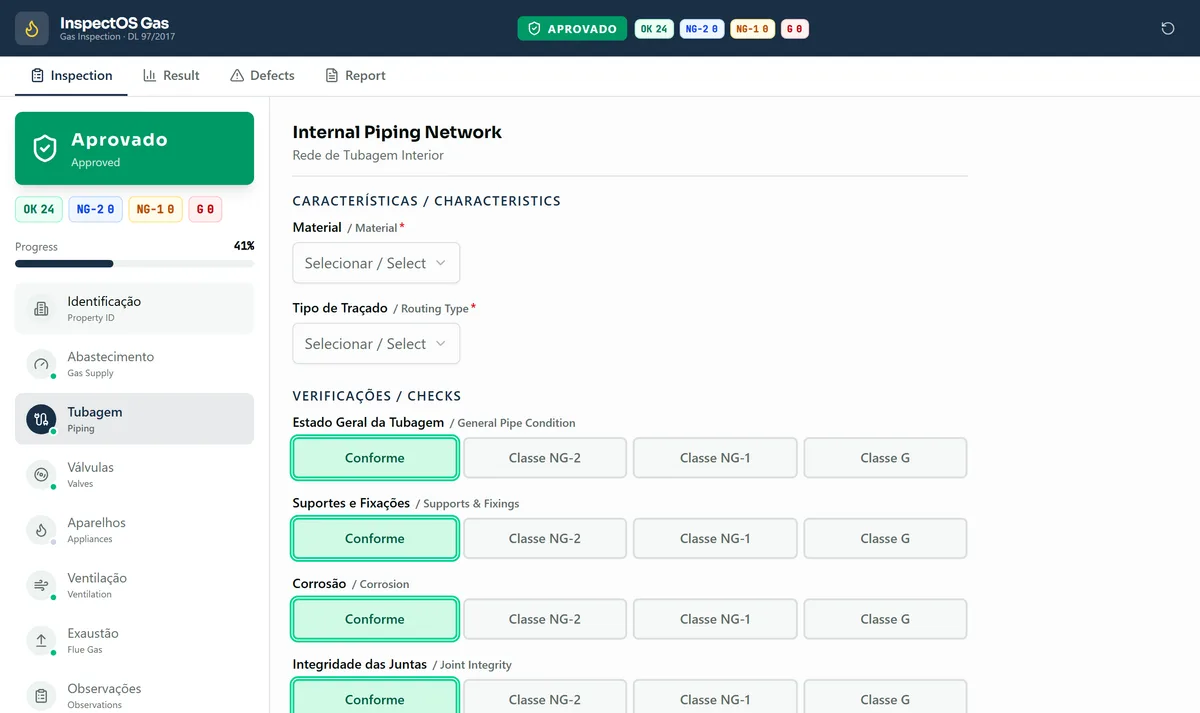
What the engineer records, section by section
Every field below is in the module, as the engineer fills it in on site. Items marked as checks are rated conforming or given a defect type.
01Property Identification
Property Data
- Municipality
- District
- Fraction
- Building Type
- Year Built
- Floor Area
02Gas Supply & Metering
Gas Type
- Gas Type
- Supplier
Meter
- Meter Location
- Meter Accessibilitycheck
- Meter Conditioncheck
Pressure Regulator
- Regulator Type
- Regulator Conditioncheck
- Supply Pressure
Supply Pipe
- Pipe Material
- Pipe Conditioncheck
03Internal Piping Network
Characteristics
- Material
- Routing Type
Checks
- General Pipe Conditioncheck
- Supports & Fixingscheck
- Corrosioncheck
- Joint Integritycheck
- Labelingcheck
Tightness Test
- Test Performed
- Result
- Test Pressure
- Test Duration
04Shutoff Valves
General Shutoff
- Valve Present
- Accessibilitycheck
- Operabilitycheck
Floor Shutoff
- Valve Present
- Accessibilitycheck
- Operabilitycheck
Appliance Shutoffs
- Valves Present
- Accessibilitycheck
- Operabilitycheck
05Gas Appliances
- Appliance Type
- Brand
- Model
- Power
- Location
- Connection Type
- Flame Condition
- Safety Device
- CO Reading
- Appliance Classificationcheck
06Ventilation
Combustion Air
- Combustion Air Supplycheck
- Air Openings Adequatecheck
Room Ventilation
- General Room Ventilationcheck
- Kitchen Ventilationcheck
Ventilation Grilles
- Grille Conditioncheck
- Grille Sizingcheck
07Flue Gas Evacuation
Flue Type
- Flue Type
- Flue Material
Flue Condition
- General Flue Conditioncheck
- Flue Terminationcheck
- Condensation Draincheck
Tests
- Draft Test Performed
- Draft Test Result
- CO Spillage Test
08Site Observations
- General Observations
- Access Conditions
- Inspection Limitations
- Recommendations to Owner
What the law says
- Under Decreto-Lei n.º 97/2017, a gas installation made more than 10 years ago and not remodelled is inspected every 5 years. (DL 97/2017, art. 21.º n.º 1 b))
- The owner or usufructuary is responsible. The condominium answers for common parts, and a tenant only if the lease transfers it. (DL 97/2017, art. 17.º)
- DL 97/2017 sets no fine for an owner who skips the periodic inspection. After a DGEG notice there are 3 months; then the distributor cuts the supply. (DL 97/2017, art. 29.º n.º 1; art. 21.º n.os 2, 3)
- Defects fall into three classes: G, where supply is refused or cut at once; NG-1, to be repaired within 60 days; and NG-2, fixed at the next intervention. (DL 97/2017, art. 15.º)
What our engineers found
- A DGEG-recognised EIG approved most of the gas installations it inspected in 2026 at the first inspection.
- A pending result from the EIG means the non-conformities have to be corrected and the installation inspected again before it can be approved.
What this means for you: When an installation does not pass, the report lists each non-conformity so it can be fixed before the reinspection.
From the InspectOS 2026 inspection data, a random sample of our inspections.See the 2026 inspection data
Guides to read next
Frequently asked questions
- How often must a gas installation be inspected?
- A gas installation made more than 10 years ago and not remodelled is inspected every 5 years (DL 97/2017, art. 21(1)(b)).
- What do the G, NG-1 and NG-2 defects mean?
- They are the three classes in DL 97/2017, art. 15. With a G defect, supply is refused or cut at once. An NG-1 must be repaired within 60 days. An NG-2 is fixed at the next intervention.
- Who is responsible for the gas inspection, landlord or tenant?
- The owner or usufructuary. The condominium answers for common parts, and the tenant only if the lease passes the duty on (DL 97/2017, art. 17).