
Cracks in walls and structure: InspectOS Pro section A
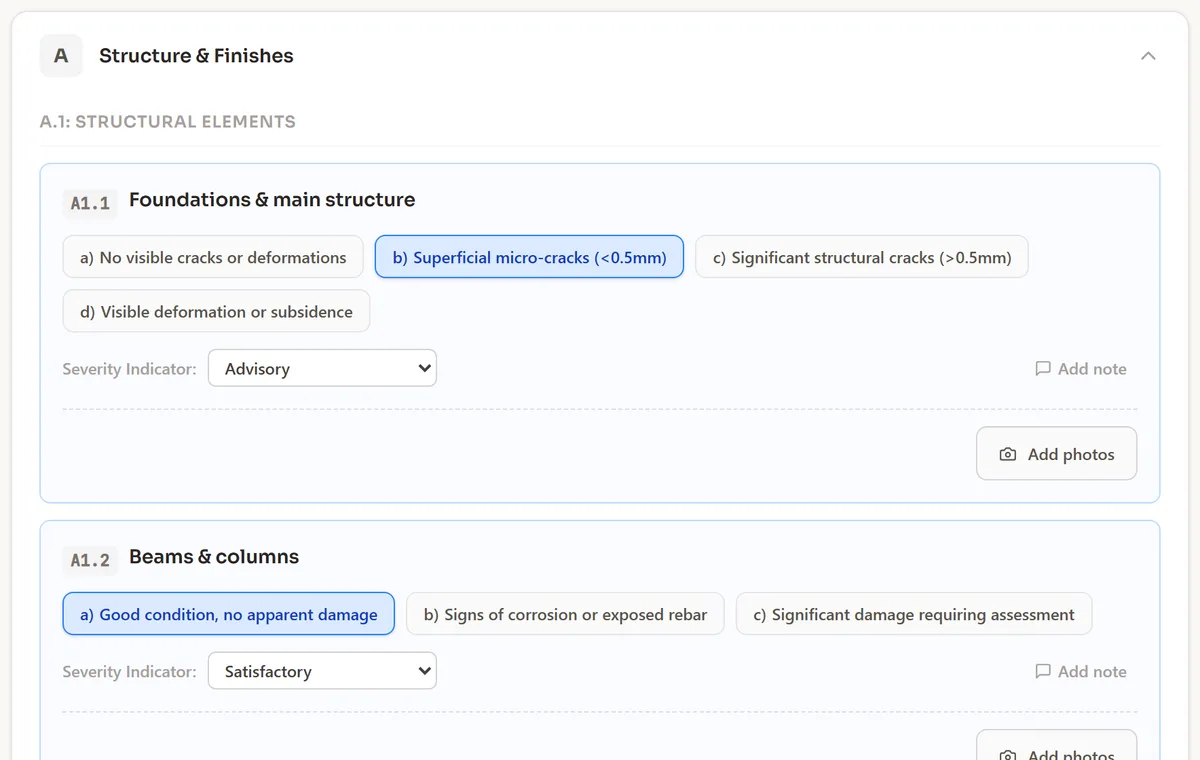
Section A of InspectOS Pro records the condition of the structure, walls and floors. The engineer picks one answer per checkpoint and gives it a severity level. Cracks and deformation are recorded here before any other section.
InspectOS Pro is rolling out in phases. Some capabilities described below are still being built.
Cracks in walls and other signs in the structure
Cracks in walls: surface or structural?
A fine crack in plaster is common and often cosmetic. A wider crack, running diagonally from the corner of a window or door, or one that returns after painting, can point to movement in the structure. The method separates surface micro-cracks below 0.5 mm from structural cracks above it.
Cracks in exterior walls and the facade
A crack in the facade lets rainwater reach the wall behind it. The engineer rates the facade from intact coating to water infiltration or structural damage.
Checkpoints in the method: A2.2
Doors that stick and sloping floors
Doors that stop closing properly, uneven floors and cracks that widen towards one corner can all come from settlement. The method records visible deformation or subsidence, the level of the floors and how the doors work.
Rust stains and spalling concrete
Rust stains and concrete breaking away on beams, balconies or slab edges can mean the steel inside is corroding. The engineer records signs of corrosion or exposed reinforcement.
Checkpoints in the method: A1.2
Stains on the ceiling
A stain on a ceiling is a record of water, now or in the past. The method distinguishes active infiltration with visible damage from visible damage where the infiltration has stopped.
Checkpoints in the method: A3.2
The inspection is visual: the engineer works through each checkpoint on site and records the condition found on the day.
A.1: Structural Elements
- A1.1Foundations & main structureCritical checkpoint
Possible answers
- a)No visible cracks or deformations
- b)Superficial micro-cracks (<0.5mm)
- c)Significant structural cracks (>0.5mm)
- d)Visible deformation or subsidence
- A1.2Beams & columns
Possible answers
- a)Good condition, no apparent damage
- b)Signs of corrosion or exposed rebar
- c)Significant damage requiring assessment
- A1.3Slabs & horizontal elements
Possible answers
- a)No deflection or cracks
- b)Slight deflection or hairline cracks
- c)Excessive deflection or structural damage
A.2: Walls & Coatings
- A2.1Interior walls
Possible answers
- a)Good overall condition
- b)Localized cracks or stains
- c)Extensive damage or detachment
- A2.2Exterior walls / facade
Possible answers
- a)Coating intact
- b)Partial cracks or detachment
- c)Water infiltration or structural facade damage
- A2.3Window frames & glazing
Possible answers
- a)Functional and watertight
- b)Minor wear, poor sealing
- c)Significant damage or inoperable
- A2.4Doors
Possible answers
- a)Functional
- b)Minor wear, poor sealing
- c)Significant damage or inoperable
A.3: Floors & Ceilings
- A3.1Floors
Possible answers
- a)Level and in good condition
- b)Minor surface wear
- c)Uneven or loose pieces
- d)Structural floor damage
- A3.2Ceilings
Possible answers
- a)No cracks, stains, or deformations
- b)Surface stains or cracks
- c)Active infiltration with visible damage
- d)Visible damage with no longer active infiltrations
What our engineers found
- The exterior walls and facade were rated non-conform in 29% of inspections. In an apartment, the facade is a common part shared with the other owners.
- A former pergola enclosed to create a bedroom with a bathroom. The engineer recorded settlement of the foundation in that area, with related cracking, linked to the loads the works had added.
What this means for you: A closed-in terrace or extension adds load the original structure may not have been built for. Look for cracks where the new part meets the old.
From the InspectOS 2026 inspection data, a random sample of our inspections.See the 2026 inspection data
Guides to read next
Frequently asked questions
- Is a crack in a wall serious?
- It depends on the width and the pattern. Checkpoint A1.1 separates superficial micro-cracks, under 0.5 mm, from significant structural cracks, over 0.5 mm. Diagonal cracks at door and window corners, or cracks that come back after painting, need closer attention.
- What are the signs that a building has settled?
- Doors and windows that stick, uneven floors and cracks that widen at one end. The method records them in A1.1 as visible deformation or subsidence, and in A3.1 as an uneven floor.
- What does rust or exposed rebar in concrete mean?
- It means the steel in the structure is corroding. Rusting steel swells and breaks the concrete around it. Checkpoint A1.2 records it on beams and columns, and significant damage leads to a structural assessment of its own.
Book the visit
- Pre-Purchase Inspection
from 595 €
Book - Structural & Seismic
from 2,250 €
Book